
Norway’s trains are not always the fastest way to travel. But they are often the most memorable.
From mountain plateaus and deep valleys to fjords, forests and remote Arctic landscapes, travelling by train in Norway can be part of the experience rather than just a way to get around.
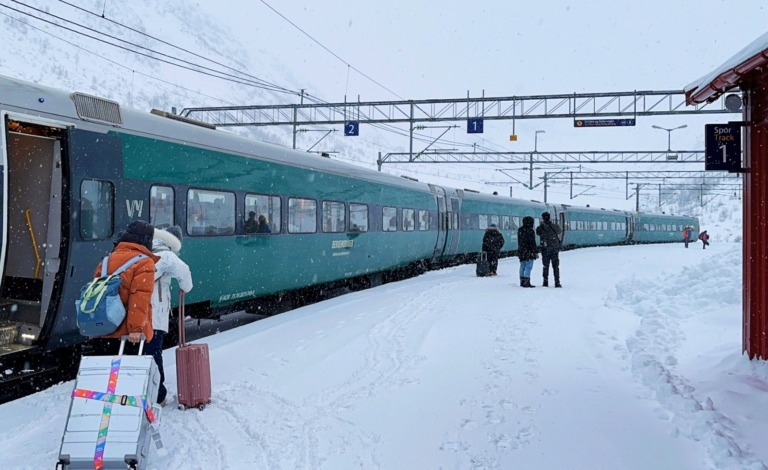
For visitors, that makes rail travel an appealing option. You can sit back, avoid long drives on unfamiliar roads, and watch some of Norway’s most dramatic landscapes pass by the window.
But train travel in Norway also comes with limitations. The network does not reach everywhere, journeys can be long, and engineering works or weather-related disruption can affect travel plans.
Here’s what you need to know before planning a trip around Norway by train.
Table of Contents
Why Travel By Train In Norway?
For many visitors, the biggest reason to take the train is the scenery. Several Norwegian railway lines are attractions in their own right, especially the Bergen Line between Oslo and Bergen, the Flåm Railway, the Rauma Line, and the Nordland Line between Trondheim and Bodø.
That said, it is important to set realistic expectations. Even the most famous routes are not scenic every minute of the journey.
Norway’s railway network includes many tunnels, forested sections and practical stretches through towns and suburbs. The magic often comes in sections: a sudden view across a mountain plateau, a valley opening up beside the train, or a fjord glimpsed between tunnels.
Train travel can also be good value, especially if you book early. Long-distance train tickets in Norway are often far cheaper when bought in advance, although the cheapest tickets tend to be limited in number and less flexible.
There is also the environmental argument. Norway’s domestic flight network is extensive, and flying is often the practical choice for long distances. But when the train works for your itinerary, it can be a lower-emission and more relaxing way to travel.
What To Know Before You Book
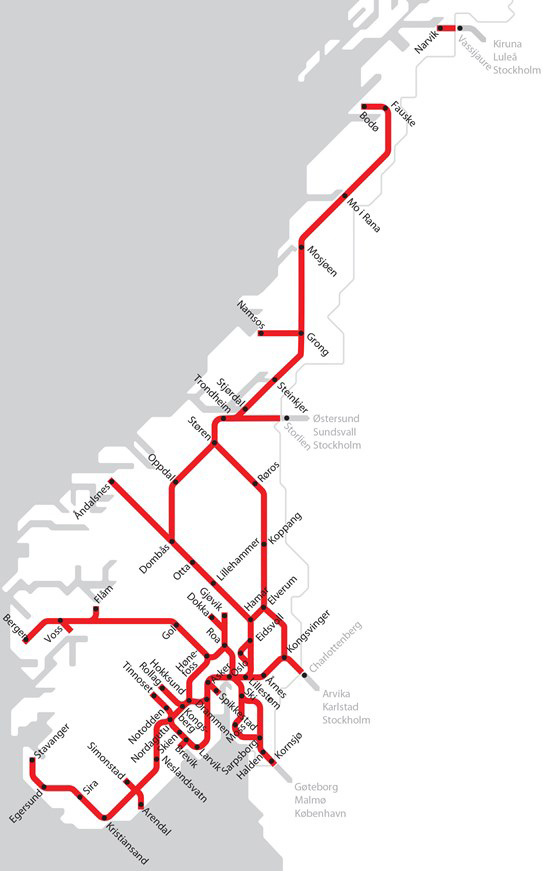
Norway’s railway network is useful, but not comprehensive. Most long-distance routes radiate out from Oslo, which means some journeys that look simple on a map are awkward by train.
For example, travelling between Bergen and Trondheim by rail is possible, but it usually means going via Oslo. Ålesund, Tromsø, Lofoten, Geiranger and many fjord villages are not directly served by train at all. In those cases, you will need to combine rail with buses, ferries, flights, rental cars or coastal ships.
This is not a reason to avoid trains. It is simply a reason to plan carefully. For some itineraries, the train can be the backbone of the trip. For others, it may work best as one scenic leg within a wider journey.
How Train Travel Works In Norway
Norway’s passenger trains are operated by several companies. Vy runs many services in eastern and western Norway, including the Bergen Line. SJ Nord runs several routes in central and northern Norway, including the Dovre Line, Rauma Line and Nordland Line.
Go-Ahead Nordic runs the Sørland Line between Oslo, Kristiansand and Stavanger, along with local services in the Stavanger region, although this will soon change.
For most travellers, however, the company operating the train matters less than you might expect. Norway has a national journey planner Entur.no, which brings together public transport information from across the country. You can use Entur to plan journeys by train, bus, ferry, tram and metro.
In most cases, you can also buy train tickets through Entur. This makes life much easier for visitors, as you do not need to understand the details of Norway’s railway contracts before booking a journey.
Vy’s website and app are also useful, especially for journeys involving Vy trains. Vy also sells tickets for some services operated by SJ Nord and Go-Ahead. The main exception to the centralised system is Flytoget, the Oslo Airport Express Train, which has its own ticketing system.
How To Buy Train Tickets In Norway
The easiest place to start is Entur.no. Enter your departure point and destination, and the journey planner will show available options, including connections between trains and other public transport.
For straightforward long-distance journeys, such as Oslo to Bergen or Trondheim to Bodø, you can also book through the relevant operator. Vy, SJ Nord and Go-Ahead all have English-language information online.
The most important rule is simple: book long-distance trains in advance if your plans are fixed. The cheapest fares are limited, and prices usually rise as the departure date approaches. This is especially true during the summer holiday season, around Easter, at Christmas, and before major events.
Some tickets are flexible, while cheaper tickets may have restrictions on changes or refunds. Always check the conditions before booking, especially if your trip involves a flight connection, cruise departure or another fixed commitment.
Seat reservations are included or required on many long-distance trains. If you are travelling with an Interrail or Eurail pass, you may still need to reserve a seat on certain routes. Entur handles seat reservations for passholders on trains run by Vy, SJ Nord and Go-Ahead.
Remember To Check For Rail Replacement Buses
One of the most important practical tips for train travel in Norway is to check for engineering works before you travel.
Norway’s rail infrastructure requires regular maintenance, and some of the most disruptive work is often scheduled during holiday periods, especially in summer. This can mean “buss for tog”, which literally means bus for train.
A rail replacement bus is not always a disaster. In many cases, it is well organised and clearly signed at the station. But it can change the feel of a journey, add time, complicate luggage handling, and make tight connections more stressful.
This is especially important if you are planning a scenic train journey. A bus replacement on part of the Bergen Line, Rauma Line or Nordland Line may still get you from A to B, but it may not deliver the experience you imagined.
Before travelling, check your journey in Entur or on the operator’s website close to departure. Do this even if you booked weeks or months in advance.
Bergen Line: Oslo to Bergen
The Bergen Line is Norway’s most famous long-distance railway, and for good reason. It connects Oslo and Bergen by crossing mountains, valleys and the Hardangervidda plateau, one of the most exposed and dramatic landscapes in southern Norway.
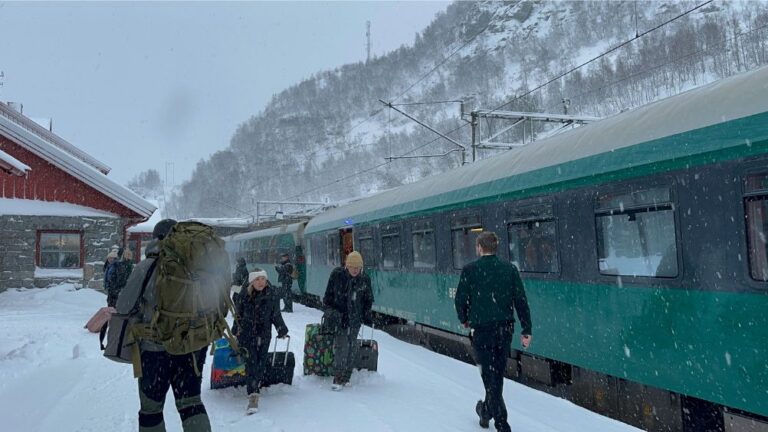
The full journey usually takes around seven hours. Some travellers use it as transport between Norway’s two biggest cities, while others see it as a sightseeing trip in its own right.
The most memorable stretch is across the mountains, especially around Finse, the highest station on the line. In winter, the landscape can feel almost Arctic. In summer, the plateau opens into a wide, rocky, windswept world of lakes, cabins and distant snow patches.
If you are planning to take the Flåm Railway, you will usually travel on the Bergen Line to Myrdal and change trains there.
Flåm Railway: Myrdal to Flåm
The Flåm Railway is one of Norway’s best-known tourist attractions. It runs between Myrdal mountain station on the Bergen Line and the fjord village of Flåm, deep beside the Aurlandsfjord.
The journey is short, but dramatic. The train descends steeply from the mountains towards the fjord, passing waterfalls, cliffs, tunnels and valley views along the way.
Because the Flåm Railway is so popular, advance booking is strongly recommended in the main season. Cruise ship days in Flåm can be especially busy, and departures may sell out.
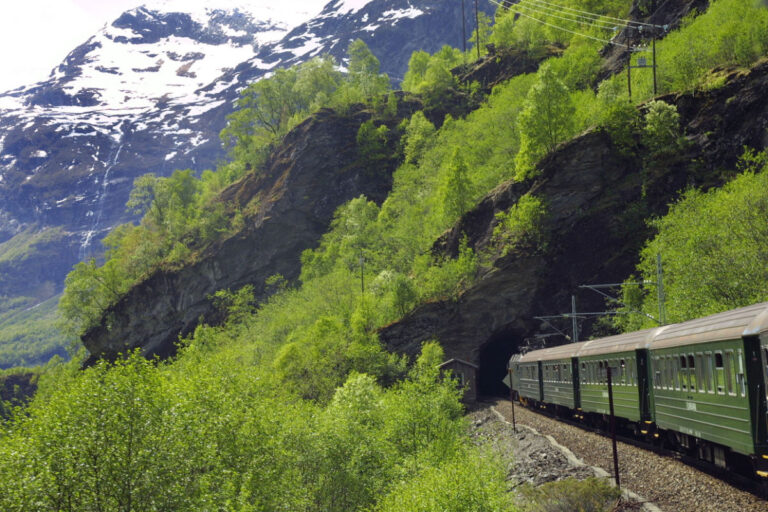
The journey works well as part of a wider rail-and-fjord itinerary between Oslo and Bergen. But it is worth remembering that Flåm itself can be crowded in summer, so consider staying overnight or visiting outside peak hours if you want a calmer experience.
Dovre Line: Oslo to Trondheim
The Dovre Line links Oslo and Trondheim through eastern Norway and across the Dovre mountains. It is not as internationally famous as the Bergen Line, but it is still one of Norway’s great railway journeys.
The route includes a mix of farmland, lake views, valleys, forest and mountain scenery. The stretch across Dovrefjell is the highlight for many travellers. This is one of the few places in Norway where musk oxen live in the wild, although seeing one from the train is a matter of luck.
The Dovre Line is also useful for reaching Lillehammer, Gudbrandsdalen and Dombås. From Dombås, you can change to the Rauma Line for Åndalsnes.
If your goal is simply to travel between Oslo and Trondheim, the train is slower than flying. But if you value comfort, scenery and city-centre to city-centre travel, it is a strong option.
Rauma Line: Dombås to Åndalsnes
The Rauma Line is one of the most scenic short railway journeys in Norway. It branches off the Dovre Line at Dombås and runs down to Åndalsnes, a small town surrounded by some of the country’s most dramatic mountain scenery.
The line follows the Rauma valley, passing steep slopes, bridges, waterfalls and views towards the Romsdal Alps. One of the best-known sights is Kylling Bridge, a stone railway bridge on a sweeping curve above the river.
Åndalsnes is a useful base for travellers interested in hiking, mountain views and the Romsdalen region. It is also close to famous attractions such as Trollveggen, the Troll Wall, and the road to Trollstigen, although access depends on season and road conditions.
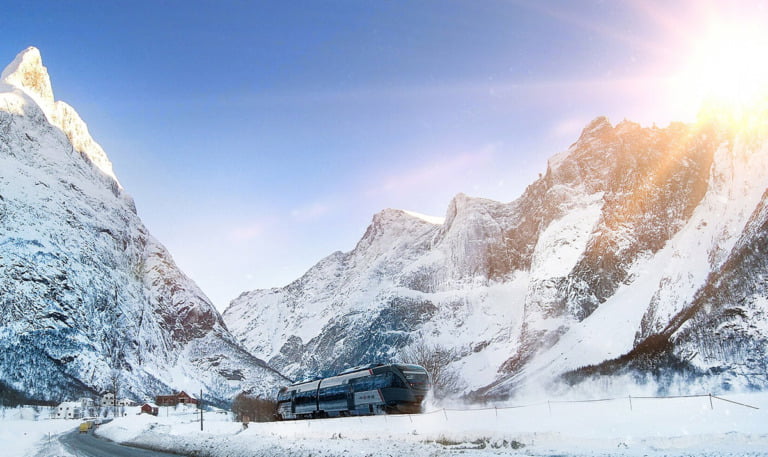
For many visitors, the Rauma Line works best as a detour from the Oslo to Trondheim route rather than a standalone journey.
That being said, if you're visiting Åndalsnes, there is a tourist roundtrip service known as The Golden Train that you could consider. It covers the best of the Rauma Line and included scenic commentary.
The Nordland Line: Trondheim to Bodø
The Nordland Line is Norway’s longest continuous railway journey. It runs from Trondheim to Bodø, crossing the Arctic Circle along the way.
This is not a quick trip. The full journey takes around ten hours, and many travellers choose to break it up. But for those interested in slow travel, remote landscapes and reaching northern Norway without flying, it is a memorable option.
The route changes character several times. It begins in Trøndelag, continues through forest and inland valleys, crosses the Arctic Circle, and eventually reaches the coast at Bodø.
Bodø is the northern end of Norway’s railway network. From there, you can continue by ferry to Lofoten, by bus to other parts of Nordland, or by air to destinations farther north.
The Nordland Line is also a route where you should check current operating information carefully. Weather, landslides, infrastructure work and other disruption can affect services, and replacement buses may be used on parts of the route.
The Sørland Line: Oslo to Kristiansand and Stavanger
The Sørland Line connects Oslo with Kristiansand and Stavanger. It is not usually considered one of Norway’s most spectacular rail journeys, partly because much of the route runs inland rather than along the coast.
Even so, it is a useful and comfortable way to travel between southern Norway’s main cities. It is especially relevant for visitors combining Oslo with Kristiansand, Stavanger, or the Lysefjord region.
The line is currently operated by Go-Ahead Nordic. Vy is due to take over services on the Sørland Line, Jær Line and Arendal Line from December 2027, so check current operator information if reading this guide after that date.
Night trains also run on this route, making it possible to travel between Oslo and Stavanger while saving a night of accommodation.
What Are Norwegian Trains Like?
Norwegian long-distance trains are generally comfortable rather than luxurious. Seats are usually spacious enough, and many trains have power sockets, Wi-Fi and toilets.
Wi-Fi quality varies. It is usually fine for messaging, email and light browsing, but do not rely on it for video calls or streaming. Many lines pass through tunnels, mountains and remote areas where mobile signal may disappear.
Long-distance trains often have a café or vending area, depending on the route and train type. The food is usually simple: hot drinks, snacks, sandwiches and sometimes hot meals. It is a good idea to bring your own food and water, especially on longer journeys or if travelling with children.
Luggage space is available, but it can be limited at busy times. Avoid travelling with more than you can comfortably lift and move yourself. On some trains, large suitcases may need to be stored away from your seat.
Many trains offer quiet zones, family areas or upgraded seating categories. The names and details vary by operator, so check when booking rather than assuming every train has the same layout.
Night Trains In Norway
Night trains can be a useful way to cover long distances in Norway. They operate on several major routes, including Oslo to Bergen, Oslo to Trondheim, Trondheim to Bodø, and Oslo to Stavanger, although availability can vary.
The basic choice is between a regular seat and a sleeping option. Some operators also offer reclining premium seats on selected night trains.
A sleeper compartment usually gives you a private or shared compartment with two berths. Depending on the operator and product, you may get bedding, a sink, power sockets and other simple facilities. Toilets are usually shared at the end of the carriage.
Night trains are practical, but do not expect hotel-level comfort. Trains move, stop, make noise, and pass through stations during the night. If you are a light sleeper, bring earplugs and an eye mask.
Even so, a night train can be a memorable and efficient way to travel. It combines transport and accommodation, and it can give you an extra day in your itinerary.
Can You Travel Around Norway Only By Train?
You can see a lot of Norway by train, but you cannot see all of Norway by train.
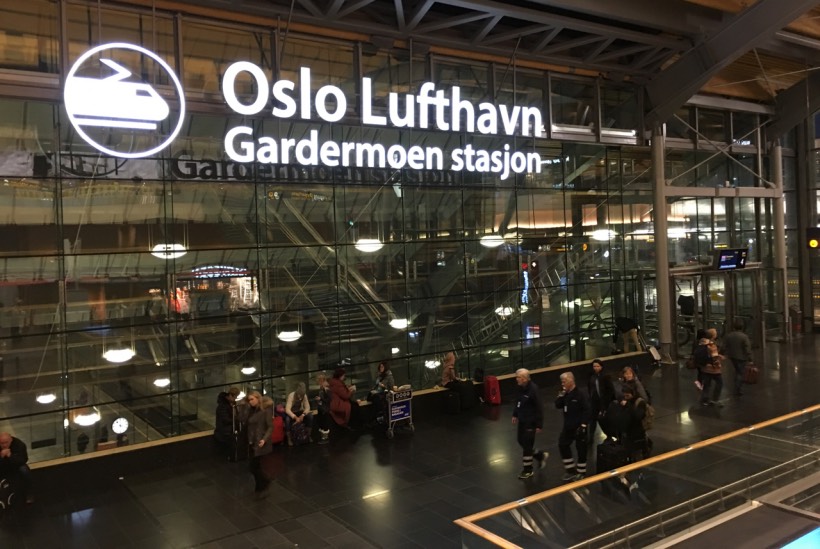
A rail-based trip works especially well if you focus on Oslo, Bergen, Trondheim, Stavanger, Kristiansand, Bodø, Flåm or Åndalsnes. You can build excellent itineraries around the Bergen Line, Flåm Railway, Dovre Line, Rauma Line and Nordland Line.
But many famous Norwegian destinations require other transport. There is no train to Ålesund, Geiranger, Lofoten, Tromsø, the North Cape or most fjord villages. Even places that appear close to a railway station may require a bus, ferry or organised tour to reach the main attraction.
This is why Entur is so useful. It lets you see how trains connect with buses, ferries and local transport. For travellers without a car, those connections are often the difference between a good itinerary and a frustrating one.
International Trains From Norway
Norway’s railway network also connects with Sweden, making international rail travel possible.
There are trains between Oslo and Gothenburg, with onward connections towards Malmö and Copenhagen. Oslo is also connected with Stockholm by train, making Sweden a realistic extension to a Norway trip.
For travellers from continental Europe, reaching Norway by rail usually involves travelling through Denmark and Sweden. This takes longer than flying, but it can work well for slow travellers, Interrail users or anyone planning a wider Scandinavian trip.
International rail links are also developing. A direct Oslo to Copenhagen, Hamburg and Berlin train has been announced for summer 2028, which could make rail travel between Norway and continental Europe much simpler in the future.
Practical Tips For Train Travel In Norway
Book early for the best prices, especially on long-distance routes and in summer.
Check your journey again close to departure. Engineering works, replacement buses and timetable changes are common enough that you should not rely only on the information you saw when you first booked.
Build in extra time if you have a flight, cruise, ferry or guided tour to catch. Norwegian trains are often comfortable and reliable, but weather, technical issues and infrastructure problems can still cause disruption.
Reserve seats when required, especially if travelling with an Interrail or Eurail pass. Bring snacks and water for long journeys. Café services are useful, but they are not a substitute for being prepared.
Do not overpack. You may need to carry luggage between platforms, onto replacement buses, or through stations without much assistance.
Most importantly, treat the train as part of the trip. In Norway, the journey is often the point. A rail itinerary may not always be the fastest way to travel, but with the right expectations and a little planning, it can be one of the most rewarding ways to see the country.


I’ve traveled Bergen to Oslo round trip several times and each trip brings new views that I missed before. These trips were always taken late May to early/mid June and the countryside in springtime is truly beautiful. When I first traveled the route there were no tunnels in the high country and was able to see a little bit of the countryside but the train is so fast that going through tunnels today one doesn’t miss very much. The trains are very comfortable and the coffee pot is always available. Try to book in advance if possible as the price should be a little less than purchasing ticket day of travel and enjoy the beautiful scenery whichever direction you are going!
Earlier this year we travelled from Trondheim to Bodø. The train was very comfortable with coffee on tap. For the long journey I took books, puzzles and sewing and didn’t touch them once. The view from the window was ever-changing and glorious. I filled my camera before I even got to Bodø to see my son and family. And it was very good value. Must do more. Thanks for the articles David. They are really helping us to get to know this wonderful country.
How far in advance can you book tickets? I am thinking of taking the Trondheim to Bodo route in April 2020.
Do you know if you can attach a car seat to the train seats (a car seat that fits onto airplane seats)? We will be traveling with an infant and toddler. They will be more likely to nap on the train if they are in their car seat. Thank you.
I enjoyed your article. I was supposed to visit Norway in July 2020 but grounded. Would like some help to travel from Oslo to Geiranger and then to Bergen. NW. How many nights to book with the vast distance.
Hi I am looking to book a train for our travel in Norway. How can I find out where they stop? Will they stop for tourist attractions so I might take pictures? Places such as large waterfalls? Is there one that is better for sightseeing?
Thanks for your help, Susanne
The only tourist railway is the Flåm Railway – that includes a couple of short stops in order to take photos. All other railway lines are regular rail lines, but the views are often spectacular from the window.
Does anyone know how soon you can check in for night trains? We are really on the fence and as the train leaves at 11PM being able to get in a little early, settle in and get comfortable would make all the difference. Thanks!
Too late for you but if it is any help to others with the same question I recently travelled on a sleeper train from Stockholm to Narvik and the train was available to board around 30 minutes before departure.
The Nordland Line, Trondheim to Bodo was filmed in 2016 by the NRK. There
were 4 runs on the line; Spring, Summer, Fall and Winter. I have watchd all
4 of them. But because the Spring and Fall films have been watched by so
many people, so many times, the quality of them has seriously deteriorated.
I would like to see these two runs refiilmed, and why not? And why not
film the rought going in the opposite direction from Bodo to Trondheim??
I am of Norwegian descent, and my father’s grandparents emigrateds to
the United States from Norway in 1873. And I am very much proud of my
Norse ethnic heritage.
Stockholm to Narvik
I am trying to book tickets for the sleeper train from Stockholm to Narvik but cannot get through to the payments. Any suggestions?
That’s operated by SJ in Sweden, so you have to book through them.
A little late now I expect but the sleeper train from Stockholm to Narvik is run by VY not SJ. VY also run the sleeper from Stockholm to Lulea and the train from Lulea to Narvik. The Narvik line from Sweden has only recently reopened after being closed for a while due to repairs (there was a bus replacement for the final part of the journey). I travelled on it in July 2024 and it is fully open and an amazing train journey that I would thoroughly recommend. Both VY and SJ have recently updated their booking and payment systems and there have been issues but these seem resolved now.
Checking if any trains will transport my car as well