
White-sand beaches, dramatic granite cliffs, medieval ruins and colourful harbour towns make Bornholm one of Denmark’s most distinctive holiday destinations.
Out in the Baltic Sea, well to the east of the rest of Denmark, Bornholm feels like a little world of its own.
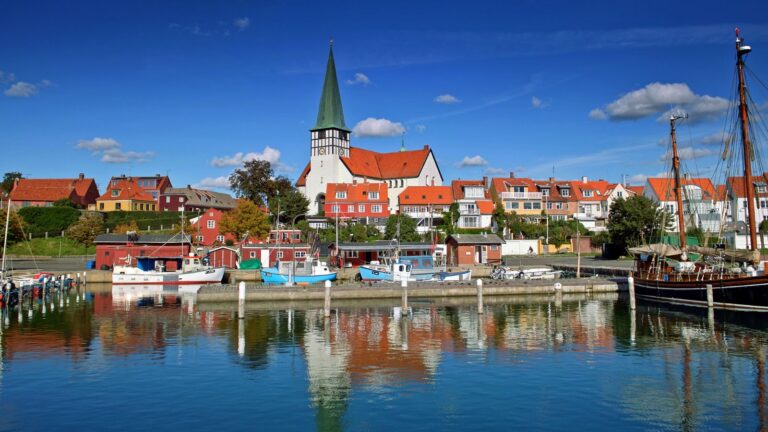
The Danish island combines many of the things that make a Scandinavian summer so appealing: small fishing villages, cycling routes, locally produced food, long evenings by the water and plenty of space to slow down.
Yet the landscape is surprisingly varied for such a compact island. Southern Bornholm is known for broad sandy beaches, while the northern coastline is altogether more dramatic, with granite cliffs and rocky coves. The forested interior adds another dimension entirely.
Bornholm has long been a popular holiday destination for Danes, but it remains relatively unknown to many international visitors. For anyone planning a longer stay in Copenhagen or a wider trip around Scandinavia, it is well worth considering.
Bornholm Travel Resources: Hotels and Accommodation – Travel Insurance
The island's tourism organisation promotes Bornholm as a year-round destination, although summer remains the obvious time for beaches, cycling and harbour life.
Rønne: The Gateway to Bornholm
For most visitors, the first glimpse of Bornholm comes in Rønne. The island's largest town is the arrival point for the main passenger ferries and makes a practical base for anyone travelling without a car.
But don't rush straight through. Rønne's old centre is filled with cobbled lanes, colourful houses and historic buildings that immediately introduce the slower pace of life found elsewhere on the island.
The harbour remains important to everyday island life, while museums and cultural attractions tell the story of Bornholm's maritime history and its experiences during the Second World War.

Rønne is also the hub of Bornholm's bus network. Regional buses fan out around the island towards places including Hasle, Allinge, Sandvig, Gudhjem, Svaneke, Nexø and Dueodde, making a car-free trip entirely realistic with a little planning.
That said, Bornholm is an island where having your own wheels—whether two or four—does give you considerably more freedom.
Hammershus and the Rocky North
Bornholm's most famous historic attraction is impossible to miss. Hammershus stands high above the Baltic Sea on the island's northern coast. The enormous medieval complex is considered the largest castle ruin in Northern Europe.
Parts of the fortress date back to the Middle Ages, when control of Bornholm was contested between Danish kings and powerful church authorities.
Today, fragmented walls, towers and gateways spread across the hilltop, while the location itself is every bit as memorable as the history.
A modern visitor centre sits discreetly in the landscape opposite the ruins and provides background to the fortress and the people who lived there.
Allow some time simply to walk around. On a clear day, the combination of ruined stone walls, rugged coastline and open Baltic Sea makes this one of Bornholm's most impressive places.

Nearby Allinge and Sandvig make good bases for exploring northern Bornholm, where the landscape is noticeably rockier than the sandy south.
Bornholm's Remarkable Round Churches
Another feature distinguishes Bornholm from almost anywhere else in Denmark: its medieval round churches. Four of Denmark's seven surviving medieval round churches stand on the island, at Østerlars, Olsker, Nylars and Nyker.
Østerlars is the largest and best known. Its circular whitewashed walls surround a substantial central pillar, creating an interior quite unlike that of a conventional Scandinavian church.
The churches were built for worship but also incorporated defensive features, reflecting a time when Bornholm's isolated position in the Baltic made protection especially important.
You don't necessarily need to visit all four. Seeing one is enough to appreciate one of Bornholm's most distinctive architectural traditions.
The White Sands of Dueodde
If Bornholm has a postcard beach, it is Dueodde. Located on the southern tip of the island, the beach stretches for several kilometres and is famous for extraordinarily fine white sand.
Sandbanks create areas of shallow water close to shore, while dunes and pine forest separate much of the beach from the surrounding holiday-home areas.
Even at busy times, the sheer size of Dueodde means it is usually possible to walk away from the main entrances and find a quieter stretch.
Wooden ramps from the main parking areas improve access through the dunes for bicycles, pushchairs and wheelchairs, although they stop short of the shoreline itself.
Dueodde Lighthouse towers above the landscape and offers sweeping views across southern Bornholm.
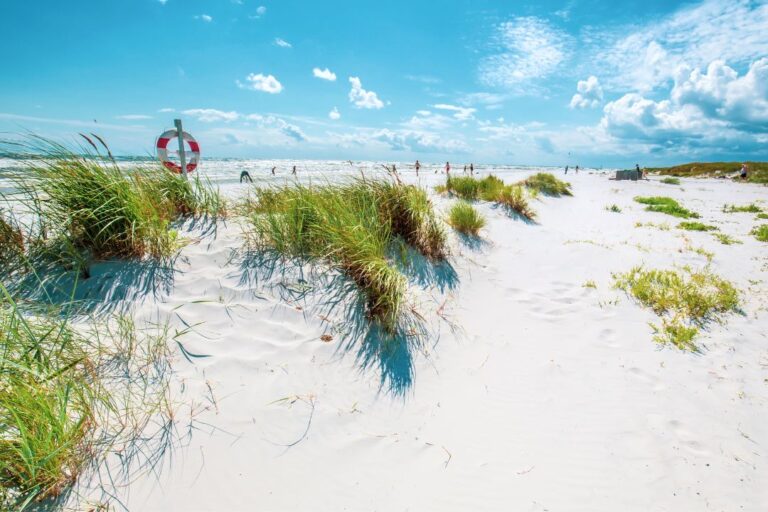
It's easy to see why the beach is such an important part of the island's summer appeal.
More Beaches on Bornholm
Dueodde may be the headline act, but it isn't the island's only beach.
Nearby Balka is especially popular with families thanks to its sandy shore and relatively shallow water.
Sandvig, in the north, offers a completely different setting. Here, sand meets the harder granite landscape that characterises this part of Bornholm.
The contrast is one of the joys of travelling around the island. You can spend the morning beside rocky cliffs in northern Bornholm and be walking barefoot along soft white sand in the south later the same day.
Gudhjem: Classic Bornholm Harbour Life
Built on the slopes of Bornholm's northeast coast, Gudhjem is one of the island's most picturesque settlements. Red roofs tumble down towards a compact harbour, while narrow streets climb steeply behind the waterfront.
Gudhjem also provides an introduction to another important part of Bornholm culture: smoked fish. The town was once filled with smokehouses and became known for the chimneys rising above its rooftops. Smoking remains part of the local food tradition today.
One Bornholm speciality you'll see frequently is Sol over Gudhjem—traditionally smoked herring served on rye bread with chives, radish and raw egg yolk.
Gudhjem is also the departure point for seasonal boat trips along the rocky coast, including services towards the dramatic Helligdomsklipperne.Helligdomsklipperne: Bornholm's Dramatic Coast
Bornholm isn't simply a beach island. Along the northeast coast, the Helligdomsklipperne—often translated as the Sanctuary Cliffs—show an altogether wilder side of the landscape.
The Baltic Sea has carved caves, columns and unusual formations into the granite coastline.
Walking trails provide views from above, while in summer a small passenger boat connects the cliffs with Gudhjem, allowing visitors to travel one way by sea and walk back along the coast.
For anyone who associates Denmark primarily with flat landscapes, this part of Bornholm may come as quite a surprise.
Svaneke: One of Bornholm's Prettiest Towns
Continue around the east coast and you reach Svaneke. The colourful harbour town is packed with traditional houses, workshops, places to eat and small independent businesses.
It's exactly the sort of place where the best plan is not to have much of a plan at all. Wander around the harbour, explore the back streets, stop for coffee or ice cream, and browse some of the small shops and galleries.

Bornholm has developed a strong reputation for food and craftsmanship, and Svaneke brings those two strands together particularly well.
Traditional fish smoking remains alive here too, alongside newer food businesses and a well-established local brewery.
Into the Forest at Almindingen
It would be easy to spend an entire trip following Bornholm's coastline, but that would mean missing the island's interior. Almindingen is one of Denmark's largest forests and contains lakes, historic ruins, walking trails and some unexpectedly rugged terrain.
Among its best-known features is Ekkodalen, or the Echo Valley. This long rift valley runs through the forest between steep rock faces. As the name suggests, visitors have traditionally entertained themselves by shouting towards the cliffs and waiting for the sound to bounce back.
Several short walking routes make it easy to include Ekkodalen even if hiking isn't the main focus of your trip. The forest is also home to a population of European bison kept within a large enclosure.
A Taste of Bornholm
Food is one of the pleasures of spending a few days on the island.
Bornholm's traditional smokehouses remain the most visible symbol of its culinary heritage. The distinctive white chimneys still rise above several coastal settlements, and smoked herring remains strongly associated with the island.
But contemporary Bornholm has gone far beyond smoked fish. Farm shops, breweries, bakeries, restaurants, cheese producers and small-scale food businesses make local produce a major part of the visitor experience.
That makes Bornholm a particularly good destination for slow travel. Rather than racing between attractions, leave time for lunch beside a harbour, an ice cream in Gudhjem or a spontaneous stop at a roadside farm shop.
Cycling Around Bornholm
Bornholm's relatively modest size has also made it one of Denmark's best-known cycling destinations.
Routes link many of the coastal towns and attractions, while former railway corridors have been converted into traffic-free cycling paths.

You don't have to cycle around the entire island to enjoy them. Hiring a bike for a day or using one to explore a particular part of the coastline is enough to experience Bornholm at a much more relaxed pace.
Bicycles can also be taken on regional BAT buses when space is available, although they aren't accepted on Rønne's city buses.
How to Travel to Bornholm
Bornholm's location makes getting there part of the experience. The fastest ferry connection is between Ystad in southern Sweden and Rønne. The crossing takes approximately 80 minutes.
That may sound strange for a journey between Copenhagen and another part of Denmark, but travelling through Sweden is usually the quickest surface route.
Bornholmslinjen also operates a longer 5-hour, 30-minute crossing between Køge and Rønne, while the seasonal or scheduled connection from Sassnitz in Germany takes around 3 hours, 20 minutes, depending on the timetable.
Always check the latest timetable before planning an itinerary, as frequency varies throughout the year.
Bornholm Travel Resources: Hotels and Accommodation – Travel Insurance
Flying is the other main option. Danish Air Transport operates flights between Bornholm and Copenhagen, as well as routes from Billund and Aalborg. The Copenhagen flight takes around 40 minutes.
How Long Should You Spend on Bornholm?
Although it is possible to visit Bornholm quickly, I wouldn't plan it as a day trip from Copenhagen unless you have a very specific reason to do so.
Too much of the day would disappear in travelling.
Two nights gives you enough time for a first look at the island, but three or four nights would be much more comfortable.
That gives you time to combine the north coast and Hammershus, one or two harbour towns, Dueodde and perhaps a walk in Almindingen without constantly watching the clock.
A week makes sense for a traditional summer holiday, especially if beaches and cycling are important parts of the plan.
When to Visit Bornholm
Summer is Bornholm's busiest season for good reason. This is when harbour towns are at their liveliest, ferries and buses are generally more frequent, seasonal attractions are operating, and beaches become a central part of island life.
Late spring and early autumn can be attractive alternatives if hiking, cycling and sightseeing matter more than swimming. Outside the main season, Bornholm becomes considerably quieter. That's appealing in its own way, but anyone travelling then should check opening hours carefully.
An Island Worth the Detour
Bornholm isn't the Denmark most international visitors know. There are no grand Copenhagen boulevards here and very little sense of rushing from one major attraction to another.
Instead, Bornholm offers something much closer to the Scandinavian summer ideal: cycling between villages, swimming from a sandy beach, eating smoked fish beside a harbour and watching the evening light linger over the Baltic.
Simply put, it's somewhere to slow down for a while.


Bornholm – Adopted home of my late college friend who with his Danish wife eventually ran a pensionet in Gudhjem.
Sadly he died before my Norwegian wife and I had chance to visit them as our Scandinavian holidays took us to the fjord country in western Norway to visit her family.